On August 21, 2020, I sent my wife a text with a link to an outfitter’s website for Dall sheep hunts in Alaska. I wrote, “This is what I want to do for my 50th birthday.” That message set a five-year process in motion. I saved money, bought gear, and shot many many bullets in preparation for an 11-day hunt that would become the hardest and most rewarding trip of my life.
I begin at that moment because non-hunters often do not realize that a hunt can take years before it ever happens in the field. By the time your boots touch sheep country, much of the hunt is already behind you. And I came to hunting later than most people. I am what is called an adult-onset hunter. I did not grow up in a family of hunters so I found my way into it as an adult. Nearly everything had to be self-taught. That was difficult, but it also meant I was not carrying tradition and or inheriting bad habits. I had to study. I had to pay attention. And make my own mistakes. Over time, hunting became less of a hobby than a discipline. It taught me how to look and wait, then make careful decisions. By the time I began thinking seriously about a sheep hunt, I understood that it would demand preparation and a willingness to measure myself against a legendary animal in an epic landscape.
This is only one part of the story. A sheep hunt contains plenty that could be told in a more conventional way. The miles, gear recommendations, climbing, waiting, and (hit or miss) the shot. Those things matter and they remain part of what happened. Here, though, I want to focus on something less obvious. I want to follow the philosophical reflections that emerged during the hunt and stayed with me after it ended. I’ve included a link below to a podcast where I discuss the hunt in more detail.
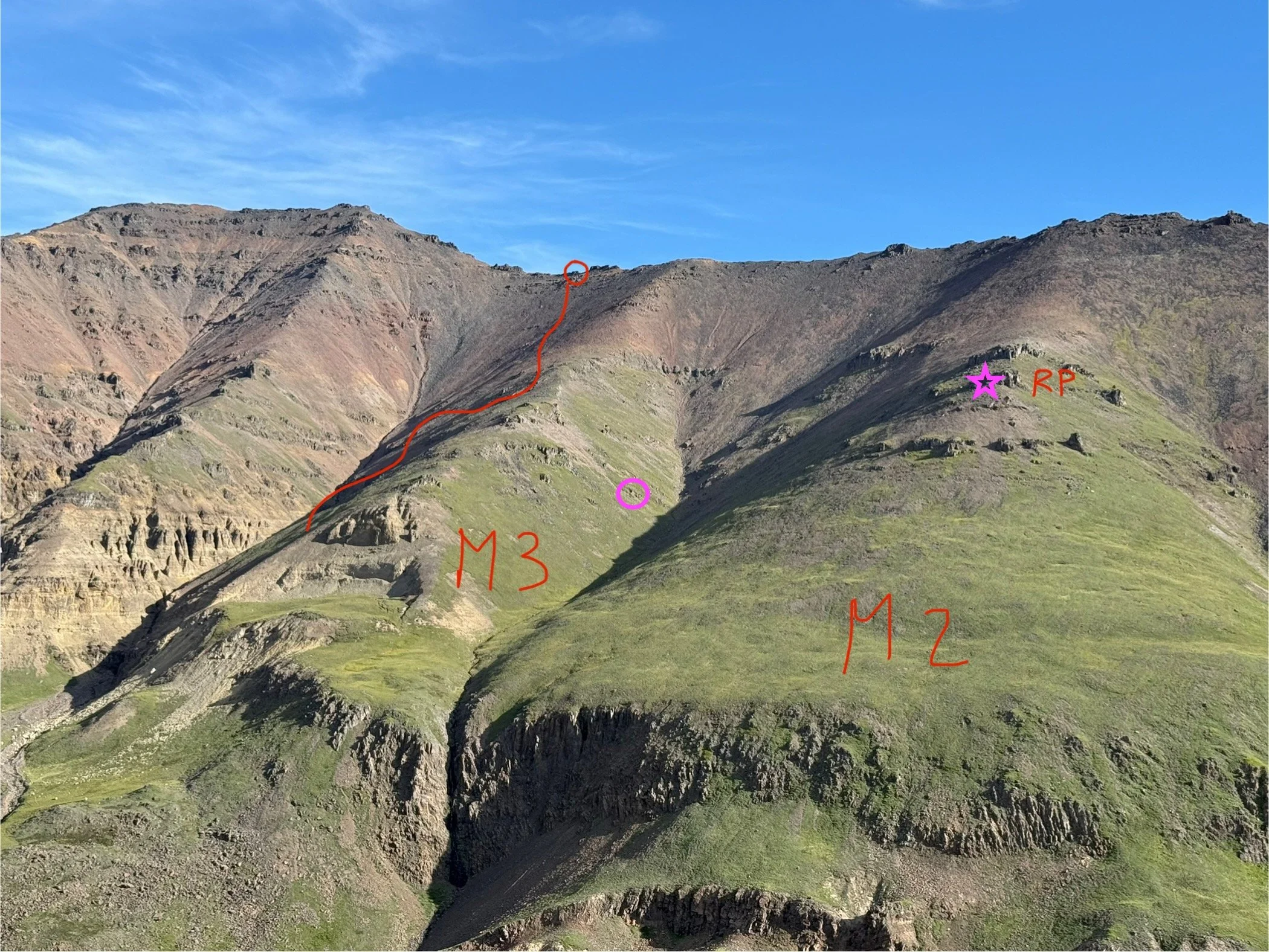
Once I met my guides in the field, we moved through spongy muskeg valleys and glassed from high points. Our plan was to set up camp five days before opening day. The country was beautiful, but that is not quite the right word. It was severe. Every reward had to be earned. Unless you have done it before, it is hard to imagine how hard a sheep hunt will be, both physically and mentally, on your legs and lungs. Dall sheep live where pressure from predators and people is lowest. That means steep ground and exposure, often at a distance. To get close, a hunter has to move at the pace the mountain allows, not the pace imagined back home.
What makes a sheep hunt a singular challenge is not only its difficulty. It requires a different kind of attention. Success does not come from forcing the landscape to fit your plan. It comes from adapting to what is there. You wait as much as you walk. You observe more than you act. You learn quickly that the hunt becomes less about imposing your will than adjusting yourself to terrain, weather, and the movement of the sheep. The landscape and the sheep set the terms. You respond.
And this is where philosophy becomes useful to me, not as a gloss, but as a way to think clearly about the experience. Writing about a sheep hunt is not only a matter of recalling hardship or repeating hunting clichés about suffering. It is also a matter of asking how attention changes under pressure, how judgment is shaped by conditions, and how recalibrating every move in relation to an animal and landscape. Those are not merely private impressions. They point to a fascinating structure of relation.
Gilles Deleuze, writing with Félix Guattari, offers a way to think through that relation without reducing the sheep and this hunt into symbols or metaphors. Their work has been widely used to think about art, literature, subjectivity, and human relations with the nonhuman world. I want to use their concepts in a different way. This essay puts those ideas into conversation with hunting, not as a loose comparison, but as a way of thinking through what happens when a hunter adjusts to terrain and animal behavior.
Their concept of becoming-animal is useful because it describes proximity without collapse. Hunter and animal do not become the same. What changes is the field of response between them. The animal begins to shape the hunter’s behavior. Pace changes. Vision changes. Minor signs take on a new importance. The hunter moves less according to comfort than according to encounter. In sheep hunting, this does not mean acting like a sheep or imagining its inner life. It means working within the same conditions that shape the animal’s movement. Wind matters. Exposure matters. Sightlines do too. Patience is essential. The sheep remains distant in every important sense, but it still exerts pressure on how the hunter sees and moves. That pressure is what interests me.
Seen this way, the hunt becomes more than a sequence of remembered actions. It becomes an extended engagement with the visible and invisible conditions that shape both human and animal behavior. I am not using philosophy to overexplain the hunt. I am using it to clarify how perception and memory are formed in a place where control is limited and relation matters more than intention. Hunting is not just pursuit. It is an effort to operate within the animal’s world rather than outside it.
Smooth and Striated Landscapes
Dall sheep country is brutal. There is a reason it’s considered one of the hardest North American big game hunts. Digital mapping software helped me anticipate elevation and distance, including weather forecasts, but they did not capture the ground itself. Watching YouTube videos or scrolling satellite imagery from home smooths over friction. It encourages a false sense of coherence. Ridges look continuous. Slopes are manageable. Distance feels abstract. The ground truth told me something very different. What looked like a simple ridgeline turned into false summits, narrow benches, and steep drop-offs that forced constant adjustment. Loose rock shifted under my boots. Shale slid. Routes that seemed obvious from above collapsed into scree fields or cliffed out. Elevation stopped being a number and became pressure in my lungs and legs. Walking a mile could take hours. A short traverse could require a long descent followed by a punishing climb back out. This gap between planning and contact was not a failure of preparation. It was a basic feature of the terrain. The landscape became legible only through movement, and even then only partially.
The sheep know this country because it’s all they have known. Their movement looked effortless, not because the ground was easy, but because their bodies were already tuned to it. They crossed shale quickly, bedded on shelves invisible from below, and slipped into folds of terrain that seemed unreachable. What looked open on a screen resolved on the ground into edges and barriers. The landscape was not an image. It was a topography that unfolded over time.
This ground-level observation is where I started to think about what Deleuze and Guattari call smooth space. To be clear, smooth space is not unstructured. It is organized by movement rather than fixed order. Paths emerge through passage. They are not prescribed in advance. That does not mean it is open or easy. In sheep country, smooth space resisted movement at every step. Distance behaved unpredictably. A direct approach was often impossible.
At the same time, sheep hunting is shaped by rules and boundaries. This is striated space. It does cross the mountain. It’s a series of overlapping layers. Seasons define when hunting is legal. Units divide the land into zones that do not match how sheep move. As a nonresident hunter, I was required to hunt with a registered guide. Licenses, tags, private land boundaries, air taxi logistics, and outfitter costs placed another system over the terrain. These striations are invisible on the ground, but they still control what is possible.
The clearest and most important striation is the definition of a legal ram. A sheep cannot be taken simply because it has been found. He must meet a specific threshold. Full curl. Broomed. Older than eight years. Even with optics, those judgments can be difficult. If there was uncertainty during the hunt, the ram had to be treated as sublegal and we moved on.
The hunt unfolded in both smooth and striated space at the same time. The mountain resisted fixed movement, while the law imposed its own regulations. Neither side ever settled the other. That tension stayed active through the whole hunt.
Becoming-Animal and the Hunt
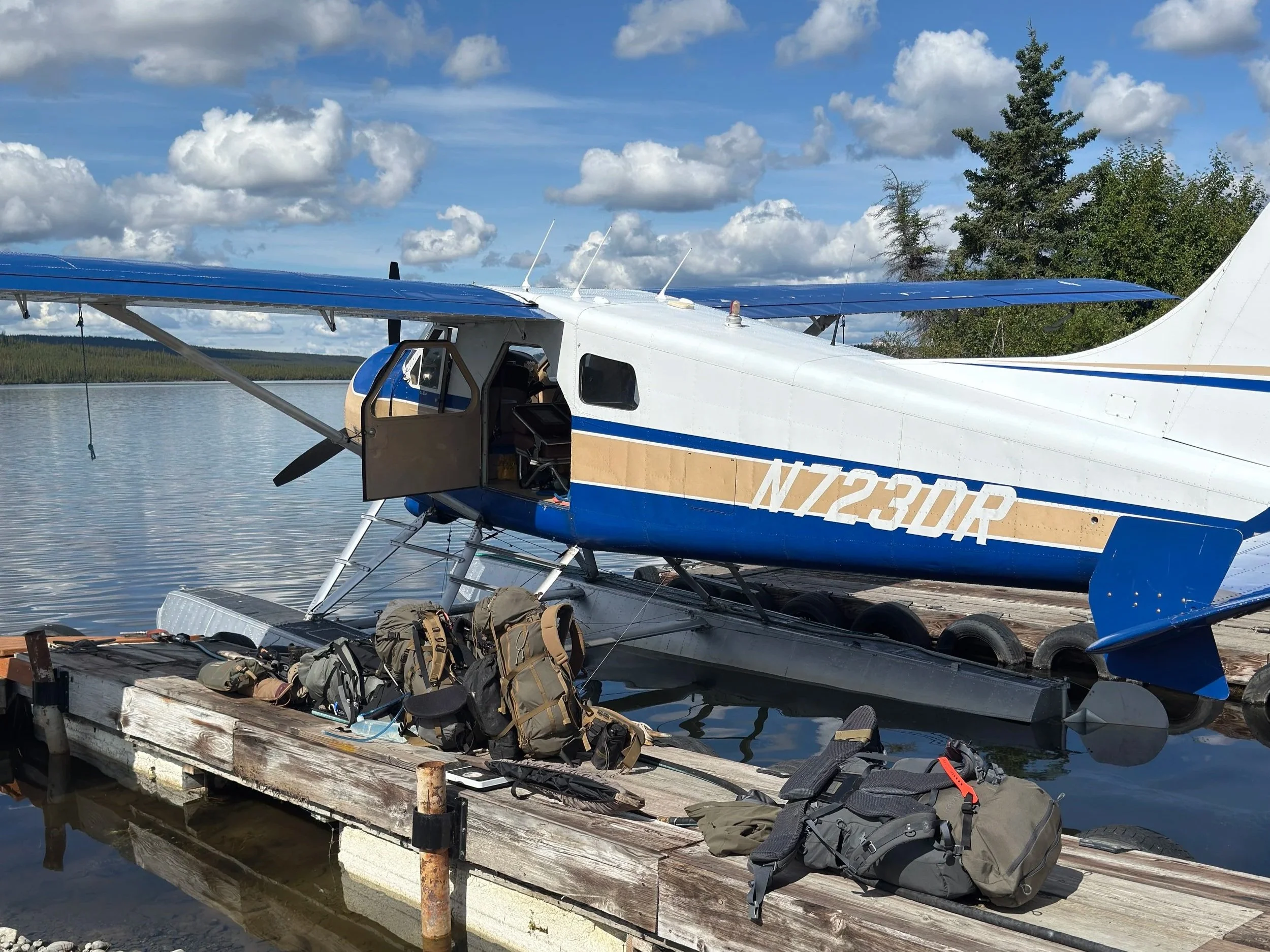
Most of sheep hunting happens long before a hunter has a ram in his crosshairs. Hours are spent glassing, waiting, and then moving carefully through country that punishes haste. My sense of time changed as soon as the float plane landed and we started walking to camp. The hunt was never only about closing distance. It was about observing without disturbing. That is where becoming-animal became useful to me again. It names a zone of proximity where human and animal ways of sensing begin to overlap without becoming identical.
A zone of proximity is not shared identity. It is shared constraint. I was not becoming a sheep. My attention was adjusting to conditions that governed both of us. Movement became more cautious. Exposure mattered more. Wind direction carried more weight. Small changes in terrain became significant. In that zone, a hunter becomes part of a larger field that includes sightlines, scent, weather, and time.
Deleuze uses becoming-wolf to think through this process. Again, it’s not about symbolism. The wolf matters as a predator defined by movement and restraint, and by how it responds. The same logic applies here. I was not trying to feel what the sheep felt. I was adopting the practical limits of hunting. Movement became conditional. Decisions had to answer to risk rather than desire. You advance only when conditions allow it or you withdraw when they do not. Within that field, the boundary between hunter and environment starts to blur. Deleuze describes this as a zone of indiscernibility. In practical terms, it happens when stillness and position make the human figure hard to read.
Camouflage matters, but less than many hunters think. Mimetic camo patterns imitate colors and textures found in the natural world. Digital patterns break up outlines at intermediate distances. Both assume concealment can be engineered through design. In that sense, both belong to a striated logic. They treat visibility as a problem to be solved through calculation. Wilderness conditions are less orderly than that. In sheep country, concealment depends on movement, angle, light, and position at a given distance. At long ranges, sheep are not reading pattern. They are detecting contrast and motion. Solid colors that match the tone of the terrain can work just as well, sometimes better, if the hunter just sits still.
That is why camouflage is never a solution in itself. It is one variable within a larger set of decisions. Distance changes. Cloud cover shifts. Angles open and close. A pattern that seems effective in one situation fails when there’s a foot of snow on the ground. At that point, camouflage becomes something you manage rather than something you trust. A sheep may ignore a shape while feeding. It will not ignore movement that interrupts the terrain. Posture and restraint do most of the work. Camouflage can support those choices, but it cannot replace them. When movement is minimized, a hunter becomes illegible regardless of pattern. When those conditions break down, camouflage offers very little protection. A single step at the wrong moment can send sheep over a ridge and out of your life.
The same is true of wind. Sight depends on distance and line of view. Scent does not. Wind can collapse space immediately. A sheep does not need to see danger to know it is there. Human odor can carry directly and without warning. A shift in wind direction can undo days of careful observation in an instant. Because of that, wind shaped the hunt more deeply than what we could see. It determined not only how we moved, but whether we moved at all. An approach that looked viable through glass out spotting scopes could become useless the moment the wind turned.
Resonance. Hunter, Sheep, Environment
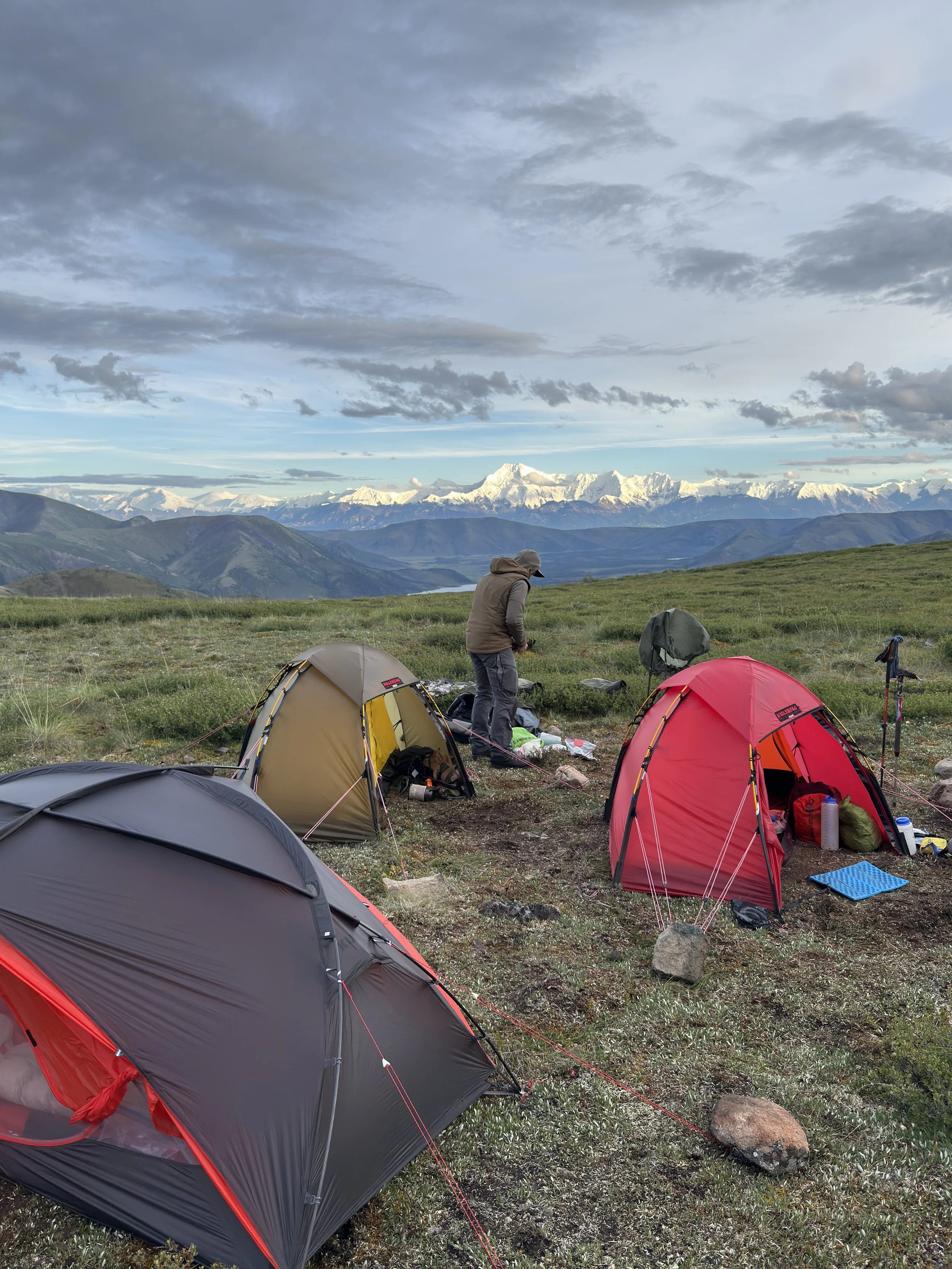
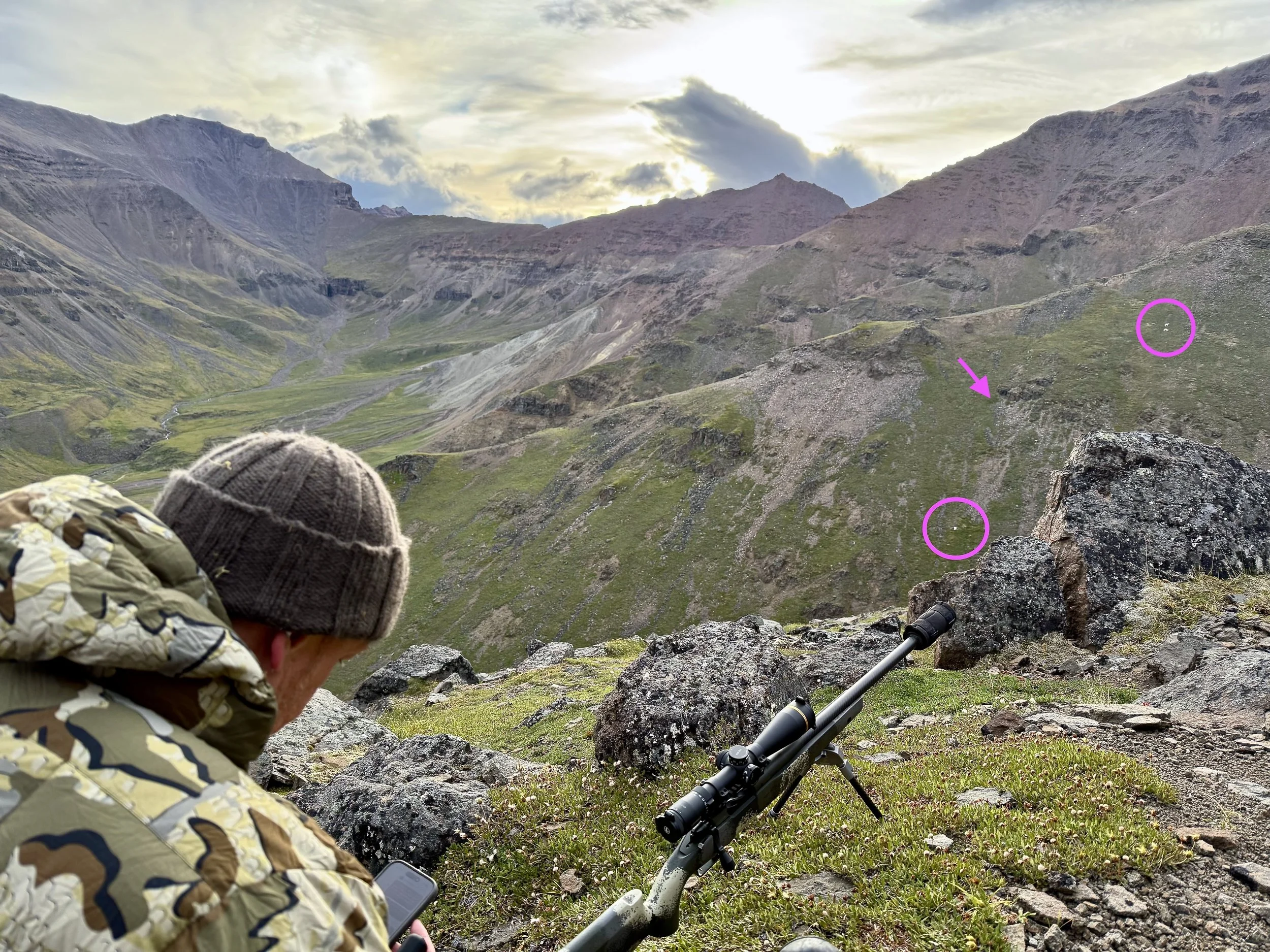
We glassed a band of four rams on the first day in camp. We could see them from our tents. That was a tremendous stroke of luck. As long as they weren’t spooked, and wolves did not move through the valley, we just had to watch and learn their pattern. They fed in green meadows. They watered in the afternoon. They bedded on high shelves. By Thursday, their movements felt familiar. By Friday, transitions became easier to anticipate. By Saturday, our own movement had started to adjust to their timing rather than the other way around.
During that time, the terms of the hunt changed. Each decision was judged less by whether it moved us closer and more by whether it preserved the conditions we had worked to maintain. The main concern was maintaining stability. Anything that risked changing those conditions was avoided.
That is what I mean by resonance. It’s mysticism or communion but a gradual alignment of behavior between hunter and animal in this landscape. Resonance forms slowly through repeated acts of restraint. Waiting when movement is possible. Backing off when exposure increases. Staying put when impatience says move. Over time, those decisions produce a shared rhythm.
The stalk started on opening day, Sunday, August 10. We knew what we had to do but it produced a different kind of uncertainty. From camp, still more than a mile from where the sheep were feeding, we could not confirm whether the ram we had been watching all week was legal. Was he full curl and 8-years old? He was close but we didn’t know for sure. We made our move anyway.
We hiked for hours, closing distance and gaining altitude while managing wind and sight lines. That movement unfolded in smooth space, shaped by terrain and the rams’ pattern, but it was directed toward a striated requirement. Only when we were within five hundred yards could my guides see the horns with confidence. Until then, the plan remained provisional. If the ram wasn’t legal, the stalk would have ended there.
Once my guides agreed that the ram was eight years old and full curl, everything focused. I laid prone behind my rifle. The weather conditions were good, but not ideal. The wind was strong and swirling, moving through the canyon instead of crossing open ground in a predictable way. The shot was downhill which made the shot more difficult. In that moment, restraint mattered more than urgency. The task was not to erase uncertainty, but to manage it. Wind can easily push a bullet off the dam’s vital organs. Even with a steady rifle and a confirmed range, a lot can happen between muzzle and target. Trusting the bullet does not mean ignoring that. It means accounting for it without overcorrecting. Shooting downhill requires a similar adjustment. Gravity does not operate the way intuition says it should. I made my scope corrections carefully and waited.
My guides were positioned on each side of me. Cole and I had practiced our script earlier in the hunt. He would say, “Hold,” until the ram offered a shot. Then he would say, “When you’re ready.” If the window closed, he would return to “Hold.” He never said “shoot” or “kill.” He simply marked the moment when an opening existed.
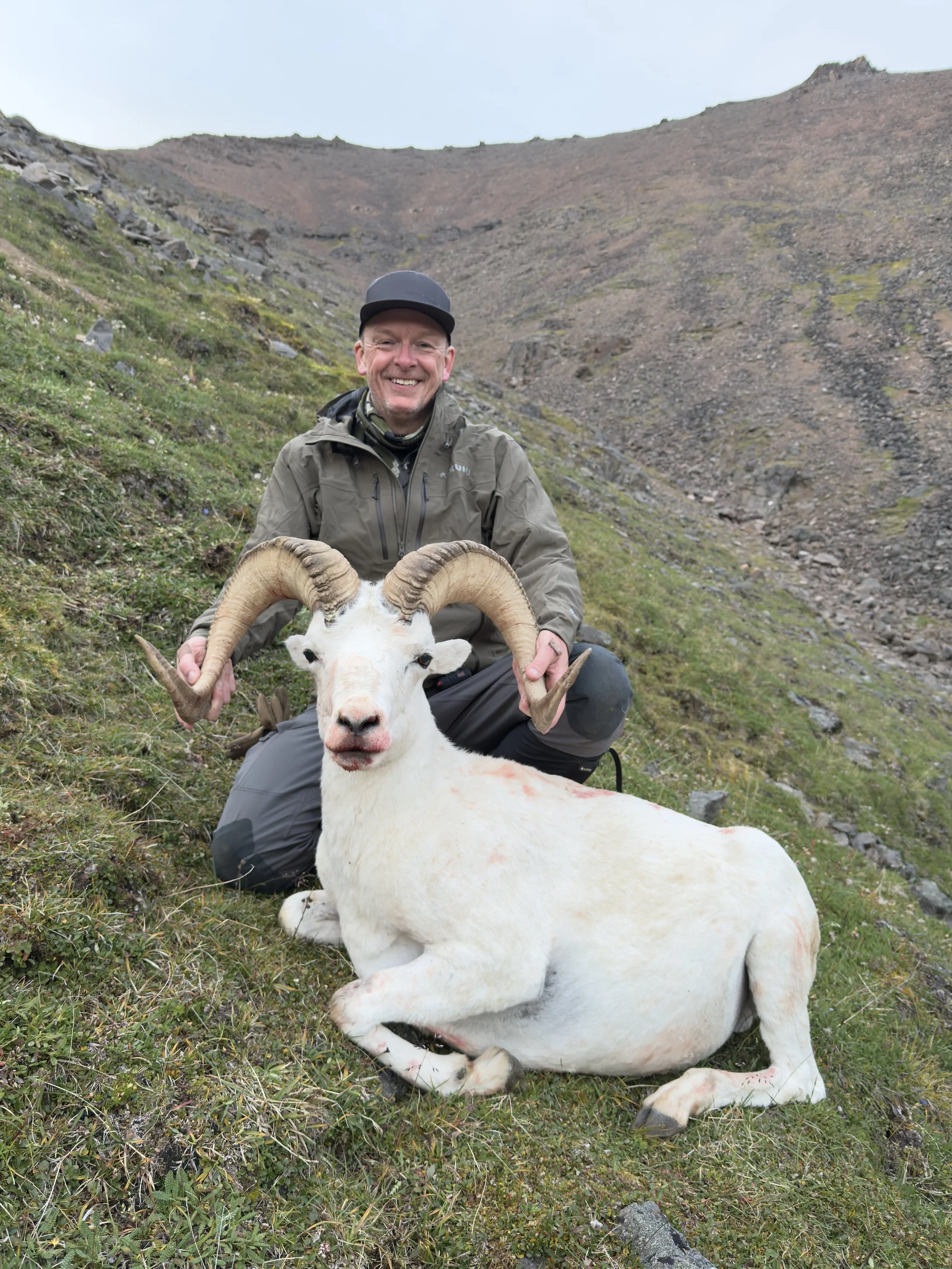
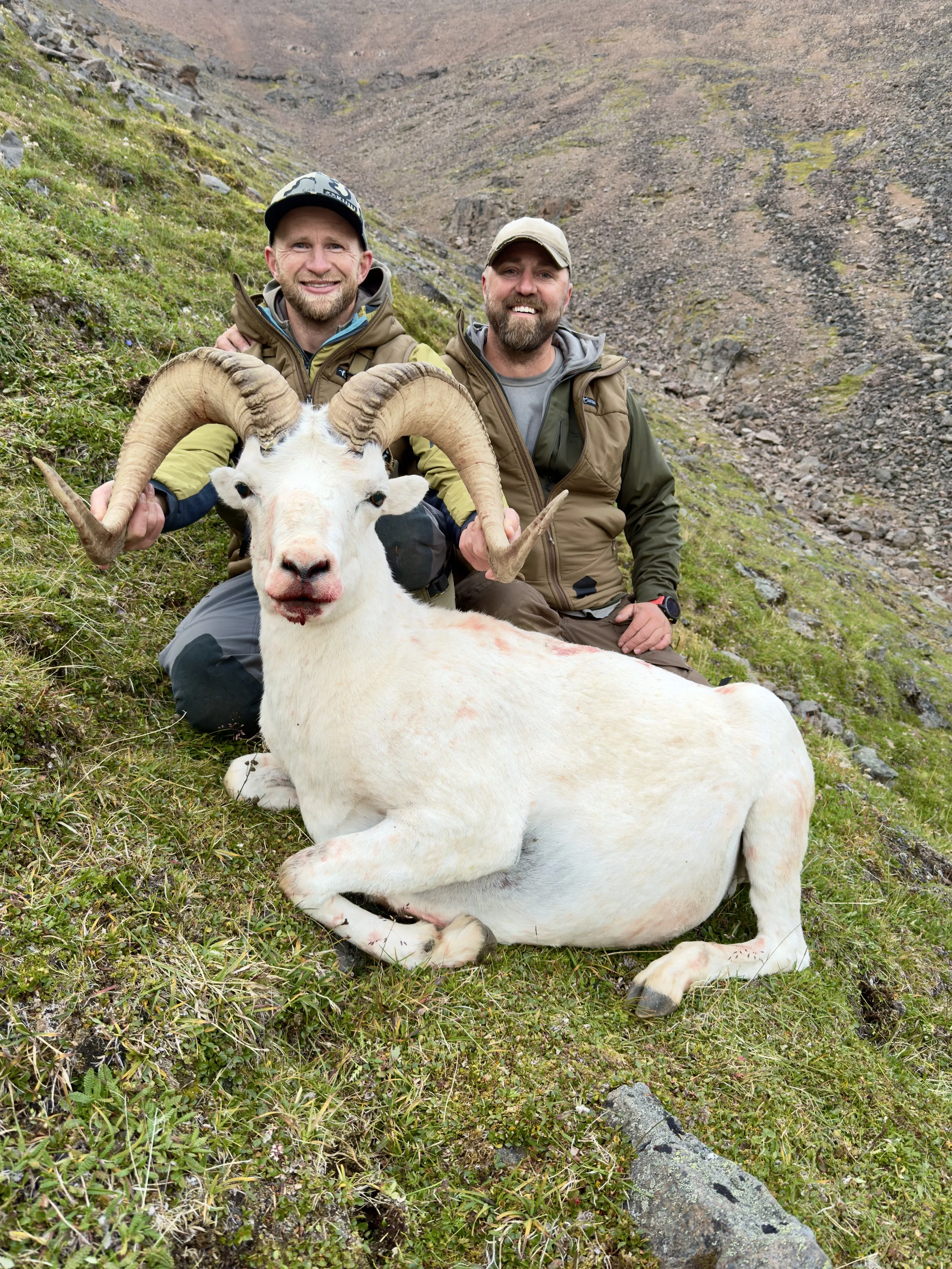
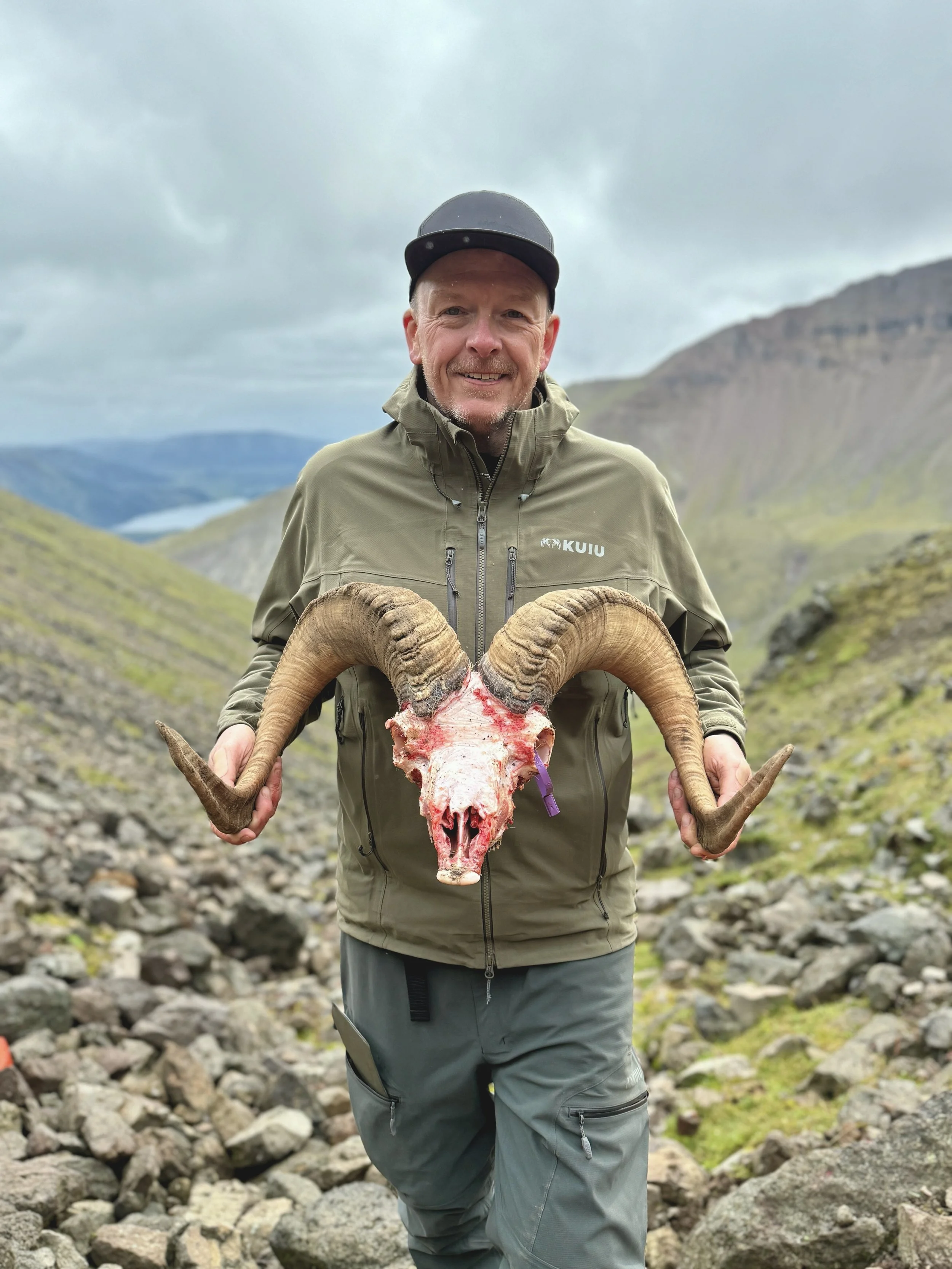
When the ram turned broadside at 367 yards, I fired one shot. He never knew we were there and he died quickly. That shot ended several days of observation and several years of preparation. But it did not explain the hunt. It only closed it.
Theory, Terrain, and Topography
It had been years since I had worked closely with these Deleuzian concepts of relation. Looking back, and with fresh eyes, I found myself thinking that they have their own topography. On the page, concepts like becoming-animal, smooth space, and resonance remained compelling, but are also oddly flat. I could understand them. I could summarize them. What I could not yet feel was their weight. That flatness resembled the way digital images of the landscape behaved before the hunt. Maps, satellite imagery, and scouting tools offered clarity without friction. They showed structure without the pressures of proximity. Writing can do the same thing. It compresses experience. It removes duration. It makes relation visible, but not always palpable.
I needed to encounter these ideas under real conditions before they made full sense to me. Once my feet were on the ground, the flatness gave way. Just as digital images failed to show loose rock, hidden benches, and the labor of crossing them, philosophical concepts remained incomplete until subjected to experience. In the field, those ideas acquired texture. Becoming-animal was no longer something to interpret from a distance. It was something learned slowly through repeated adjustment. Smooth space stopped functioning as a metaphor and became a daily fact as routes failed, distances stretched, and plans unraveled. Thought had to adapt in the same way the body did.
The hunt also made room for a concept I had not expected to confront so directly. Abandonment. I do not mean abandonment as failure. I mean the disciplined decision to stop. Wind changes or I can’t get a stable shot. We find a ram but he isn’t legal. In each case, the ethical response was not to push harder, but to disengage. A hunt should continue only while conditions justify it. Seen this way, abandonment is not incidental. It is part of the structure of the hunt. It resists the fantasy that effort alone creates success. It insists that some lines should not be crossed, even after time, money, and desire have been invested. In that sense, restraint is not opposed to action. It is one of its clearest forms.
In the end, the hunt was not defined by the shot. It was defined by duration. By days spent learning how terrain shapes movement. By the work of remaining unreadable. By repeated decisions to wait, withdraw, or let a plan go. In those conditions, philosophy did not arrive afterward as explanation. It took shape alongside experience, through movement and relation, under the discipline of restraint. The mountains made the text legible.
Listen to a podcast about the hunt at Hunt West with Jaden Bales